
 Free BAC Waterwith every order
Copper & dermatological
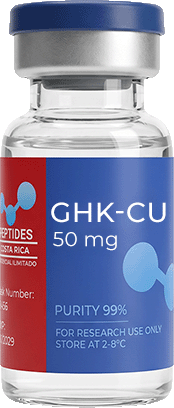
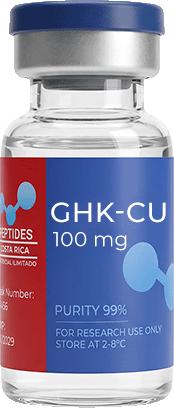
GHK-CU
★★★★★5.0 Google · 4.6 TrustpilotIn stock
₡191,365₡225,135Save ₡33,770
5 × ₡45,027 · 15% bulk discount · + free BAC Water
Strength 2 options
Quantity Best discount applies automatically
Custom quantity
Add 5 more to save 20% (₡90,054)
COA on most productsPay cash on delivery2–4 day delivery
Frequently ordered together
Bundle total
₡54,032
₡54,032
Specifications
FormLyophilized powder
Strengths50 mg · 100 mg
CategoryCopper & dermatological
Storage2–8 °C, away from light
DocumentationCOA published
TypeCopper(II) complex of Gly-His-Lys
Molecular formulaC₁₄H₂₂CuN₆O₄
Molecular weight≈ 401.9 g/mol
CAS49557-75-7
Questions
The compound and amount on the label, as lyophilized powder (or ready-to-use liquid for blends and waters). Most products have a Certificate of Analysis confirming identity and purity.
2–4 business days anywhere in Costa Rica, tracked, from our own cold storage. No customs or import fees.
SINPE Móvil, bank transfer, card, or cash when it arrives.
15% off 5+ vials of the same product, 20% off 10+. The best discount applies automatically. Every order includes a free BAC Water 3 ml, and delivery is free over ₡90,054.
No. All products are for laboratory research use only. We don't provide dosing or medical advice.
Why order from us
scienceThird-party testedCOA on most products
ac_unitCold storage on site2–8 °C until dispatch
local_shipping2–4 day deliveryLocal stock, no customs
autorenewReplacement promiseDamaged or off-batch? Replaced
What people say
 ★★★★★
Excellent service, quality, and price. For me, they are the best in Costa Rica; I hope they never change.
Daniel Manzanares Quesada · Trustpilot
★★★★★Hay stock y son rápidos y asesoran muy bien, confiable los pagos y el producto llega en buen estado.
Botanical Cosmetic · Trustpilot
 ★★★★★
Son excelentes, mil estrellas.
Lic. Juan Alfonso Mata Chavarría · Google
More in Copper & dermatological
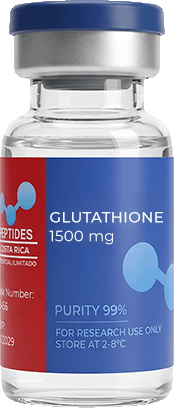
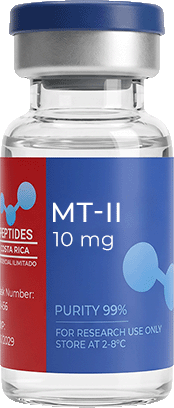
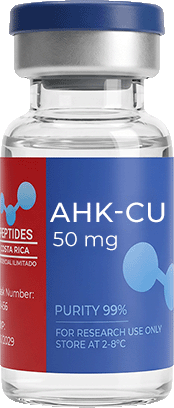
Research use only. Supplied for laboratory research. Not for human or veterinary use. We do not provide dosing or medical advice.
Studies
Where GHK-Cu Came From and What It Is Found by Accident, in Blood In 1973 Loren Pickart was comparing blood plasma from young and old donors. He put liver cells from older patients into plasma from younger ones, and the old cells started behaving like young ones. Something in the young plasma was doing it. He tracked it down to a three-residue peptide bound to albumin: glycyl-histidyl-lysine. That is GHK, and the copper came next. The Copper Part GHK binds copper(II) tightly, and the complex is what most research uses. The histidine residue does the holding. Copper is an essential trace element and a cofactor for several enzymes, including lysyl oxidase, which cross-links collagen and elastin fibres. That connection between a copper-carrying peptide and the enzymes that build connective tissue is why the molecule attracted attention in the first place. It Declines With Age Plasma levels of GHK are roughly 200 nanograms per millilitre at age 20 and roughly 80 by age 60. That measured decline is the single most cited fact about the compound and the reason it turns up in ageing research. It is an observation about concentration in blood. What follows from it is a question rather than an answer. Topical Versus Everything Else GHK-Cu has a genuine regulatory identity in cosmetics. Under the name Copper Tripeptide-1 it has been a skincare ingredient for decades, and controlled facial studies exist. Those studies are small and short, and reviewers say so. More importantly, they test a topical cream on skin. No regulator has approved GHK-Cu in any injectable form, and topical results do not transfer to any other route.
Why Choose Peptides Costa Rica’s GHK-Cu Peptides?
We specialize in supplying high-purity research peptides with a focus on transparency, fast domestic delivery, and dedicated customer support.
scienceThird-Party Lab Tested All Peptides Costa Rica products are independently tested for purity, identity, and quality. Each batch is reviewed for peptide integrity, purity levels, and contaminants, with a COA included.
historyResearch-Grade Peptides Peptides Costa Rica supplies research-grade peptides made under strict quality-control standards. Products are synthesized for high purity & provided in stable lyophilized form for laboratory research.
lab_profileTrusted Peptide Supplier Peptides Costa Rica focuses on transparent sourcing, verified testing, and consistent product quality. Researchers rely on our peptide collections for dependable products, service & support.
GHK-Cu Research Overview
GHK-Cu has one of the larger research literatures of any compound in our catalogue, and also one of the more lopsided ones.
The cell-culture work is extensive. Studies report changes in expression across a wide set of genes, effects on collagen and glycosaminoglycan synthesis in fibroblast cultures, and activity in various wound models. Much of this sits behind the compound’s reputation.
The human work is almost entirely topical and cosmetic. Controlled facial studies of creams containing the peptide have reported measurable changes, and reviewers consistently note the same limitations: small numbers of participants and short study periods.
What does not exist is a body of controlled human work on GHK-Cu given any other way. The cosmetic literature and the cell-culture literature are both real; neither tells you what happens outside those settings.
That is an unusual position for a research compound, which is well studied in two narrow contexts, unstudied in most others, and it is worth understanding before reading any claim made about it.
Get In Touch
Have questions about GHK-Cu products or research-use details? Our team can help you review available options, product information, storage guidance, and ordering details.
Why Researchers Choose GHK-Cu
A well-characterised copper peptide with a documented history, published specifications and local stock.
scienceDefined ComplexGlycyl-histidyl-lysine bound to copper(II). C14H22CuN6O4, CAS 89030-95-5.
historyLong RecordIdentified in human plasma in 1973 and studied continuously since.
lab_profileDocumented PurityHPLC purity with chromatogram and batch number on every Certificate of Analysis.
inventoryConsistent SupplyReliable availability of two vial sizes held locally for fast delivery across Costa Rica.
Trusted Source for Research Peptides
We supply high-purity GHK-Cu and other research peptides with consistent quality, transparent pricing, and reliable local delivery. Every order ships from inside Costa Rica — no customs delays, no import duties.
scienceBulk SavingsSave more with bulk purchases. Buy five or more vials of the same product and get 15% off with clear, upfront pricing and no hidden conditions.
historySimple Ordering ProcessPlace orders through a simple process—review products, confirm availability, choose your payment method, and arrange delivery within Costa Rica.
lab_profileFlexible Payment OptionsChoose from secure payment options including SINPE Móvil, Zelle, or cash for smooth and convenient transactions.
inventoryTransparency & DocumentationWe provide Certificates of Analysis along with clear communication, verified stock, and straightforward pricing for complete trust.
How to order
- 1ChoosePick the strength and quantity. Bulk discounts apply automatically.
- 2CheckoutPay by card, or send the order on WhatsApp for SINPE, transfer or cash on delivery.
- 3ReceiveDelivered in 2–4 days with your batch COA.
GHK-Cu FAQ
GHK-Cu Peptides are a copper-binding peptide complex derived from human gastric sources. It's copper complex of the tripeptide glycyl-L-histidyl-L-lysine. The free peptide is C14H24N6O4, molecular weight 340.38, CAS 49557-75-7; with copper attached it is C14H22CuN6O4, CAS 89030-95-5. It was isolated from human blood plasma in 1973, where it circulates bound to albumin. Supplied here as a lyophilised powder for laboratory use.
Store sealed vials in a cool, dry place — refrigerated at 2–8°C, or frozen for longer storage. Protect from light and moisture; this compound is sensitive to both. Keep vials sealed until use to limit contamination. Avoid repeated freezing and thawing. The material is not sterile. These are conditions for keeping the material intact, not guidance on using it.
Different molecules doing different things. GHK-Cu is a three-residue peptide carrying a copper ion, studied mostly in fibroblast culture and topical cosmetics. Glutathione is a three-residue peptide with an unusual gamma linkage and a free thiol, and is the main intracellular antioxidant. They share a residue count and very little else. See the Glutathione page for its specifications.
Different compounds from different research traditions. GHK-Cu is a copper-binding tripeptide found in human plasma in 1973 and studied largely in cell culture and topical cosmetics. Epithalon is a four-residue peptide from the Russian bioregulator programme, studied mainly for telomere-related endpoints. Neither holds regulatory approval as a medicine.
Mostly two settings. Fibroblast and other cell cultures, where gene expression and matrix protein synthesis have been measured. And topical cosmetic trials, where creams containing the peptide were tested on facial skin — small studies, short durations, as reviewers note. Outside those two settings the published human record is thin.
Orders inside Costa Rica are typically delivered within 2–4 business days. You'll receive tracking once shipped — no customs delays or import fees since everything is fulfilled domestically.
No. We supply material and paperwork. We do not give dosing guidance, administration routes or frequencies, reconstitution volumes, protocols or cycles, and we do not point people elsewhere for them. Questions about batch paperwork, specifications and certificates are welcome.