
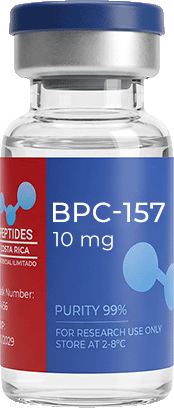
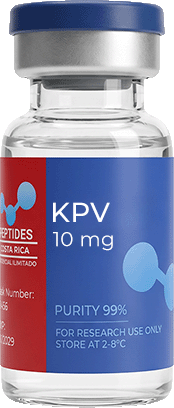
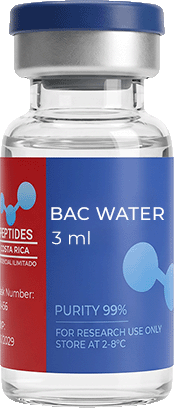
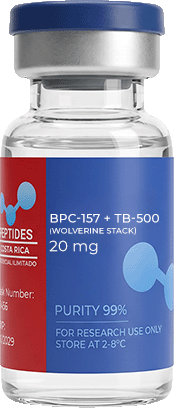
 Free BAC Waterwith every order
Tissue repair
KPV
★★★★★5.0 Google · 4.6 TrustpilotIn stock
₡172,227₡202,620Save ₡30,393
5 × ₡40,524 · 15% bulk discount · + free BAC Water
Strength 1 option
Quantity Best discount applies automatically
Custom quantity
Add 5 more to save 20% (₡81,048)
COA on most productsPay cash on delivery2–4 day delivery
Frequently ordered together
Bundle total
₡49,529
₡49,529
Specifications
FormLyophilized powder
Strengths10 mg
CategoryTissue repair
Storage2–8 °C, away from light
DocumentationCOA published
Questions
The compound and amount on the label, as lyophilized powder (or ready-to-use liquid for blends and waters). Most products have a Certificate of Analysis confirming identity and purity.
2–4 business days anywhere in Costa Rica, tracked, from our own cold storage. No customs or import fees.
SINPE Móvil, bank transfer, card, or cash when it arrives.
15% off 5+ vials of the same product, 20% off 10+. The best discount applies automatically. Every order includes a free BAC Water 3 ml, and delivery is free over ₡90,054.
No. All products are for laboratory research use only. We don't provide dosing or medical advice.
Why order from us
scienceThird-party testedCOA on most products
ac_unitCold storage on site2–8 °C until dispatch
local_shipping2–4 day deliveryLocal stock, no customs
autorenewReplacement promiseDamaged or off-batch? Replaced
What people say
 ★★★★★
Excellent service, quality, and price. For me, they are the best in Costa Rica; I hope they never change.
Daniel Manzanares Quesada · Trustpilot
★★★★★Hay stock y son rápidos y asesoran muy bien, confiable los pagos y el producto llega en buen estado.
Botanical Cosmetic · Trustpilot
 ★★★★★
Son excelentes, mil estrellas.
Lic. Juan Alfonso Mata Chavarría · Google
More in Tissue repair
Research use only. Supplied for laboratory research. Not for human or veterinary use. We do not provide dosing or medical advice.
Studies
What KPV Is and How It Works Structure and Identity KPV is a tripeptide: lysine, proline, valine. Formula C16H30N4O4, molecular weight about 342, CAS 67727-97-3. It matches residues 11 to 13 of alpha-MSH, the C-terminal end of the hormone. It is one of the smallest compounds we stock, which affects both how it is tested and how it should be stored. How It Gets Into Cells The best-known gut study, published in Gastroenterology in 2008, found that intestinal cells take KPV in through a transporter called PepT1. PepT1 normally absorbs small peptides from digested food. Once inside, KPV acted on inflammatory signalling within the cell The Melanocortin Question Alpha-MSH acts on a family of receptors called melanocortin receptors, including MC1R and MC3R. Whether KPV works mainly through those receptors is not settled. Some studies report weak binding. Others, including the PepT1 work, point to a route that does not need the receptor at all. The honest answer is that both may play a part. Anti-Inflammatory Study KPV exerts anti-inflammatory effects through two primary mechanisms studied in research: binding to melanocortin receptors (particularly MC1R and MC3R) on immune cells, and inhibiting NF-κB pathway activation — a central transcription factor in pro-inflammatory cytokine production. This dual-mechanism approach makes KPV relevant in studies examining acute and chronic inflammatory states across multiple tissue types.
KPV Research Overview
KPV research sits almost entirely in the lab. The work falls into three groups.
The largest is gut-focused. It uses cell lines grown from intestinal lining, and mouse models in which colitis is induced chemically so its signalling can be studied. The 2008 PepT1 paper is the anchor of that work. It is also the reason KPV is sometimes studied in nanoparticle carriers designed to deliver it to the gut lining.
The second group looks at skin cells and wound models, following on from alpha-MSH’s known activity in skin. The third, smaller group has looked at antimicrobial activity, which alpha-MSH and some of its fragments show in lab tests.
What is missing is human data. There are no published clinical trials of KPV, and the animal findings have not been tested in people. The mechanism is also still being worked out, as the melanocortin question above shows.
KPV has no approval from any regulator for any indication. It holds no registro sanitario with Costa Rica’s Ministerio de Salud. It is supplied here as a research material and nothing else.
Get In Touch
Questions about KPV pricing, vial size, batch documentation, storage, or delivery inside Costa Rica? Our team can confirm current stock, bulk pricing and what the Certificate of Analysis covers before you order.
Why Researchers Choose KPV
KPV is a short, fully defined peptide with a known sequence, a documented uptake route in intestinal cells and a well-studied place in the alpha-MSH family.
scienceDefined SequenceThree residues, Lys-Pro-Val, molecular weight about 342, CAS 67727-97-3, confirmed on every batch certificate.
historyPart of Alpha-MSHMatches residues 11 to 13 of the parent hormone, keeping its signalling region without the pigment-cell region.
lab_profileDocumented Uptake RouteTaken into intestinal cells through the PepT1 transporter, as shown in published preclinical work
inventoryTissue RepairStudied for epithelial healing and skin repair applications as a fragment of α-MSH, with research examining both topical and systemic delivery contexts.
Trusted Source for Research Peptides
We supply KPV and other research materials with consistent quality, transparent pricing, and reliable local delivery. Every order ships from inside Costa Rica — no customs delays, no import duties.
scienceBulk SavingsSave more with bulk purchases. Buy five or more vials of the same product and get 15% off with clear, upfront pricing and no hidden conditions.
historySimple Ordering ProcessPlace orders through a simple process—review products, confirm availability, choose your payment method, and arrange delivery within Costa Rica.
lab_profileFlexible Payment OptionsChoose from secure payment options including SINPE Móvil, Zelle, or cash for smooth and convenient transactions.
inventoryTransparency & DocumentationWe provide Certificates of Analysis along with clear communication, verified stock, and straightforward pricing for complete trust.
How to order
- 1ChoosePick the strength and quantity. Bulk discounts apply automatically.
- 2CheckoutPay by card, or send the order on WhatsApp for SINPE, transfer or cash on delivery.
- 3ReceiveDelivered in 2–4 days with your batch COA.
KPV FAQ
They are very different molecules. KPV is three residues long and is a fragment of a natural hormone, alpha-MSH. Its gut research centers on uptake through the PepT1 transporter and its effect on NF-κB signaling inside cells. BPC-157 is 15 residues long and is derived from a sequence in a gastric juice protein. Most of its research comes from one group in Zagreb, working in rats. Both are stocked here. See the BPC-157 page for its own specifications.
It is used as a tool for studying inflammatory signaling at the smallest possible scale: which part of alpha-MSH carries its activity, how a tripeptide gets into intestinal cells through PepT1, and how it affects NF-κB. It is studied in intestinal and skin cell lines, and in mouse colitis models. It has no approved human use anywhere, and no published clinical trials.
KPV is the C-terminal tripeptide (Lys11-Pro12-Val13) of alpha-melanocyte-stimulating hormone, a 13-residue peptide made in the pituitary and hypothalamus. Because alpha-MSH is itself the first 13 residues of ACTH, the same three residues also appear as ACTH 11-13. In lab studies, the fragment keeps a large part of alpha-MSH's activity on inflammatory signaling but lacks the part that acts on pigment cells. That makes it useful for working out which region of the hormone does what.
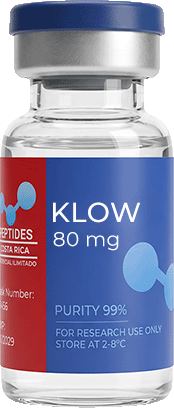
Yes. KPV is one of four compounds in the KLOW blend, alongside BPC-157, TB-500 and GHK-Cu, in one lyophilized vial. See the KLOW page for its full composition and batch documentation.
Unreconstituted KPV vials should be stored refrigerated at 2–8°C in lyophilized (powder) form, protected from light and moisture. Freezing is suitable for long-term storage. Once reconstituted with bacteriostatic water, keep the solution refrigerated and use within the timeframe outlined in your research protocol. KPV is a short tripeptide and is more susceptible to degradation from repeated temperature cycling than larger peptides — minimize freeze-thaw cycles.
Orders inside Costa Rica are typically delivered within 2–4 business days. You'll receive tracking once shipped — no customs delays or import fees since everything is fulfilled domestically.