
 Free BAC Waterwith every order
Metabolic & GLP-1
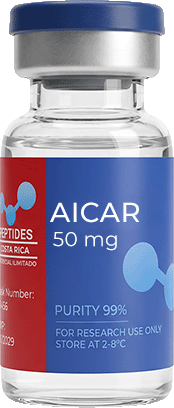
AICAR (Acadesine)
★★★★★5.0 Google · 4.6 TrustpilotIn stock
₡181,798₡213,880Save ₡32,082
5 × ₡42,776 · 15% bulk discount · + free BAC Water
Strength 1 option
Quantity Best discount applies automatically
Custom quantity
Add 5 more to save 20% (₡85,552)
COA on most productsPay cash on delivery2–4 day delivery
Frequently ordered together
Bundle total
₡51,781
₡51,781
Specifications
FormLyophilized powder
Strengths50 mg
CategoryMetabolic & GLP-1
Storage2–8 °C, away from light
Questions
The compound and amount on the label, as lyophilized powder (or ready-to-use liquid for blends and waters). Most products have a Certificate of Analysis confirming identity and purity.
2–4 business days anywhere in Costa Rica, tracked, from our own cold storage. No customs or import fees.
SINPE Móvil, bank transfer, card, or cash when it arrives.
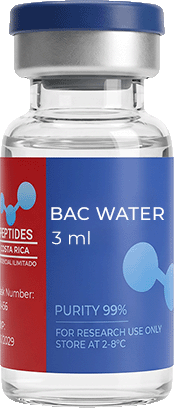
15% off 5+ vials of the same product, 20% off 10+. The best discount applies automatically. Every order includes a free BAC Water 3 ml, and delivery is free over ₡90,054.
No. All products are for laboratory research use only. We don't provide dosing or medical advice.
Why order from us
scienceThird-party testedCOA on most products
ac_unitCold storage on site2–8 °C until dispatch
local_shipping2–4 day deliveryLocal stock, no customs
autorenewReplacement promiseDamaged or off-batch? Replaced
What people say
 ★★★★★
Excellent service, quality, and price. For me, they are the best in Costa Rica; I hope they never change.
Daniel Manzanares Quesada · Trustpilot
★★★★★Hay stock y son rápidos y asesoran muy bien, confiable los pagos y el producto llega en buen estado.
Botanical Cosmetic · Trustpilot
 ★★★★★
Son excelentes, mil estrellas.
Lic. Juan Alfonso Mata Chavarría · Google
More in Metabolic & GLP-1
Research use only. Supplied for laboratory research. Not for human or veterinary use. We do not provide dosing or medical advice.
Studies
What AICAR Is and What the Studies Measured Studies exploring Adamax have focused on its influence on cognitive performance, neuroprotection, and neurological recovery. Researchers have documented the following areas of interest: Compound Class and Identity AICAR is a nucleoside analogue, not a peptide. Its chemical name is 5-aminoimidazole-4-carboxamide-1-β-D-ribofuranoside; it is also called acadesine, its international non-proprietary name, and AICA riboside. CAS 2627-69-2, molecular formula C9H14N4O5, molecular weight 258.23. The ATC code C01EB13 was assigned during its clinical development. Supplied as a lyophilised powder in 50mg vials. How It Reaches Its Target AICAR enters cells through adenosine transporters and is phosphorylated by adenosine kinase to AICAR monophosphate, known as ZMP. ZMP is a structural mimic of AMP. It binds the gamma subunit of AMP-activated protein kinase at the nucleotide-binding sites, producing allosteric activation without a genuine change in the cell's AMP to ATP ratio. That two-step route is why the riboside, not the nucleotide, is the compound supplied. What the Landmark Study Measured The paper that made AICAR widely known is Narkar and colleagues, Cell, 2008, titled “AMPK and PPARδ agonists are exercise mimetics”. The model was mice. Measured endpoints included running time and distance to exhaustion on a treadmill, skeletal muscle gene expression, and mitochondrial markers. It is a mouse study. The World Anti-Doping Agency added AICAR to the Prohibited List the following year. Clinical Development and Where It Stopped Unlike most compounds in this catalogue, AICAR reached late-stage human trials. Acadesine was licensed by Schering-Plough from PeriCor Therapeutics and entered the RED-CABG phase 3 trial in 2009, testing prevention of reperfusion injury in coronary artery bypass graft surgery. The trial was terminated in late 2010 on an interim futility analysis. Acadesine has also been explored in haematological malignancy. It holds no approval from the FDA or the EMA.
AICAR Research Overview
AMP-activated protein kinase is a heterotrimeric enzyme that responds to the cell’s AMP to ATP ratio and, when activated, shifts metabolism from anabolic to catabolic pathways. It sits upstream of a large number of processes, which is what makes it interesting as a target and also what makes systemic activation difficult to study cleanly.
AICAR has been the standard pharmacological tool for activating AMPK in cell culture and rodent work since the 1990s, and much of what is understood about the enzyme was established using it. That tool status is the compound’s real significance. Published work spans skeletal muscle, liver, adipose tissue, cardiac ischaemia models and haematological cell lines, and the great majority of it is preclinical.
Why Researchers Choose AICAR
A defined nucleoside analogue with a characterised mechanism, an assigned INN, and a documented clinical trial history.
scienceDefined IdentityCAS 2627-69-2, C9H14N4O5, molecular weight 258.23, with an assigned international non-proprietary name.
historyCharacterised MechanismPhosphorylated intracellularly to ZMP, an AMP mimic that allosterically activates AMPK.
lab_profileDocumented PurityHPLC purity with chromatogram and batch number on the Certificate of Analysis.
inventoryConsistent SupplyAICAR is held in stock in Costa Rica with fast domestic delivery for all research purposes.
Trusted Source for Research Peptides
We provide high-quality research compounds with a focus on purity, consistency, and transparency. All products are carefully sourced, reliably handled, and supported with fast delivery across Costa Rica.
scienceBulk SavingsSave more with bulk purchases. Buy five or more vials of the same product and get 15% off with clear, upfront pricing and no hidden conditions.
historySimple Ordering ProcessPlace orders through a simple process—review products, confirm availability, choose your payment method, and arrange delivery within Costa Rica.
lab_profileFlexible Payment OptionsChoose from secure payment options including SINPE Móvil, Zelle, or cash for smooth and convenient transactions.
inventoryTransparency & DocumentationWe provide Certificates of Analysis along with clear communication, verified stock, and straightforward pricing for complete trust.
Frequently Asked Questions
Here are answers to the most common questions about AICAR pricing, storage, research applications, and delivery in Costa Rica.
How to order
- 1ChoosePick the strength and quantity. Bulk discounts apply automatically.
- 2CheckoutPay by card, or send the order on WhatsApp for SINPE, transfer or cash on delivery.
- 3ReceiveDelivered in 2–4 days with your batch COA.
AICAR FAQ
AICAR is a nucleoside analogue, not a peptide. Its chemical name is 5-aminoimidazole-4-carboxamide-1-β-D-ribofuranoside, and it is also known as acadesine and AICA riboside. CAS 2627-69-2, molecular formula C9H14N4O5, molecular weight 258.23. It is supplied as a lyophilised powder in 50mg vials for laboratory use.
AICAR enters cells via adenosine transporters and is phosphorylated by adenosine kinase to the monophosphate ZMP. ZMP mimics AMP closely enough to bind the gamma subunit of AMP-activated protein kinase, producing allosteric activation without an actual change in cellular AMP. This is the mechanism reported across the cell-culture and rodent literature.
Yes. AICAR is named on the World Anti-Doping Agency Prohibited List under Section S4.4, Metabolic Modulators, and has been listed since 2009. It is prohibited at all times, in and out of competition. Established urine detection methods exist. Anyone subject to anti-doping testing should treat this as disqualifying.
Yes. Acadesine is the international non-proprietary name for the same molecule, assigned during its clinical development. AICA riboside is a third name for it. All three refer to the riboside, CAS 2627-69-2. The name ZMP refers to the monophosphate that forms inside the cell and is a different molecule.
Yes, further than most research compounds. Acadesine reached a phase 3 trial, RED-CABG, testing prevention of reperfusion injury in coronary bypass surgery. The trial began in 2009 and was terminated in late 2010 following an interim futility analysis. It has no approval from the FDA or the EMA.
AICAR is supplied as a lyophilised powder and should be stored cool and dry. Refrigeration suits short-term storage; freezing is appropriate for long-term storage. Vials should remain sealed until use, and the original packaging protects against light and moisture. Material is non-sterile and should be handled with contamination control in mind.
No. We supply material and documentation. We do not provide dosing guidance, reconstitution volumes, protocols or administration instructions, and we do not refer enquirers elsewhere for them.